
Long before anti-human trafficking became recognized globally – or even well defined – abolitionists began an organized effort to end enslavement of individuals in the late 18th and early 19th century. Fast forward to today, global and local organizations are well established in raising awareness on human trafficking while working in solidarity to identify victims and support them on their path to stability.
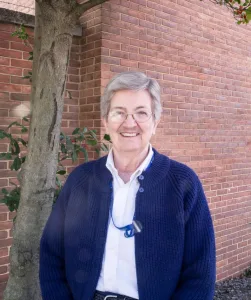
“You see these people who have been stripped of their human dignity, they’re traumatized,” explained Catholic Charities DC’s case manager Sister Mary Jean Doyle. “And you go to them, sit with them, and listen. Once they develop a sense of trust, you build on the support we can give them.”
For eight years, Sister Mary Jean has been leading Catholic Charities DC’s trafficking victims’ assistance program, which provides comprehensive and strength-based services for children and adult survivors of human trafficking. As the only case manager with Catholic Charities DC, she displays an unmatched dedication while serving clients in Washington, D.C., Maryland, and Virginia.
“I find if I introduce what I can offer them like clothes, food, schooling for their children, transportation, finding a job, legal services, they respond right away,” said Sister Mary Jean. “We [Catholic Charities DC] offer so many wraparound services and can connect them to those services.”
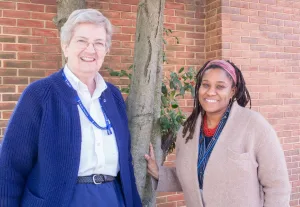
Often, she travels to clients and listens to their stories while providing a judgment-free space that is filled with compassion, support, and advocacy. “Her role as a case manager is to be a mirror to them – showing them their own light, their own strength,” said Ryan Dunn-Komeh, a deputy director at Catholic Charities DC who works closely with Sister Mary Jean. “She does it with grace and gratitude and is one of the first people they will engage with along this journey.”
But more case managers like Sister Mary Jean along with support is needed to sustain the program and continue providing help to victims of human trafficking in the region, especially as numbers continue to climb. While a full scope of the data is not exact because of the difficulty in identifying victims, there is a notable rise: 389 human trafficked applicants were received in 2008 in the region, but that number increased to over 8,000 in 2023.
Sister Mary Jean recalled a client who was labor trafficked. Originally from Africa, he was exploited in the Washington, D.C. region but was helped by Catholic Charities DC and the sister’s compassionate care. Eventually he was reunified with his wife and children and now has a stable life. “He still writes every Christmas and Easter to say thank you,” she said.
It is stories like these that remind us why human trafficking prevention matters. Catholic Charities DC invites the community to join in raising awareness, learning the signs of trafficking, and supporting the vital work of helping survivors regain a path to stability.
Together, we can ensure that every client has access to the comprehensive support they need to reclaim their lives and their future.
If you or someone you know needs help, contact us at 202-481-1414 or email TVAP@cc-dc.org.