
Monday rolls around, a school bell rings in Ward 8, and a welcoming Soul Train line forms. Kids are high-fived, encouraged, and dance out of the cafeteria as they are cheered on by their teachers, counselors, and one very special school-based mental health therapist, Karen Jones.
Meanwhile, across town in Ward 5, case management supervisor Donnita Pugh arrives at New York Men’s Avenue shelter to a barrage of questions from a client. “Give me a minute,” she calmly replies as she puts her things down and checks for any urgent issues before attending to the client.
At the same time, employment specialist Angelica Thomson is starting her day meeting with a client to help them write and sharpen up their resume to find a job, while also listening to their personal challenges.
Day in and day out, Catholic Charities DC social workers and case managers are on the frontlines of the agency’s work, providing comfort and stability to many. Their expertise and special ability to uplift, defend, and positively transform the lives of those who come to seek a safe haven or find help is unparalleled.
Passing Through
“In social services, you’re part of a person’s journey,” explained Pugh. “People might stay for just one night or pass through on their way somewhere else, but even those brief moments can make a difference.”
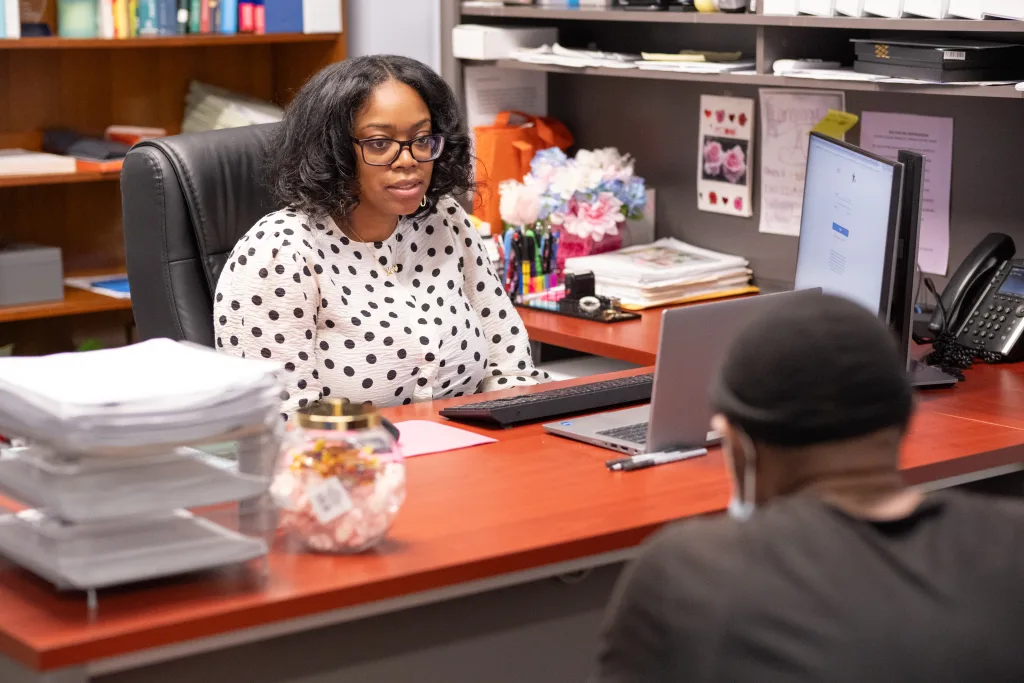
Her very first client in November 2018 came to the shelter in need of help securing funds for housing. Although he worked as a security guard with a steady income, he lacked the funds needed for initial housing costs. Which is where Pugh came in and connected him to a housing project that could help him with those initial costs.
Five years later, she ran into him while out for lunch. They glanced at each other in recognition and after exchanging hellos and how-have-you-been, he said to her, “you really saved my life; you made sure I got what I needed while I was there.” Because of her support, he was able to maintain stability and continues to thrive.
Walking In Their Shoes
Immigrants, including those with professional backgrounds, often face significant challenges finding work in the same field or even same level as they did back in their home country. Thomson meets weekly with her clients and helps them apply for jobs online, adjust their resumes, set their expectations, and even explore new opportunities.
“The motivation behind my work comes from my own experience as an immigrant,” Thomson said. “I came to this country many years ago and walked the same path that many of my clients are walking now. I understand exactly what they are going through.”
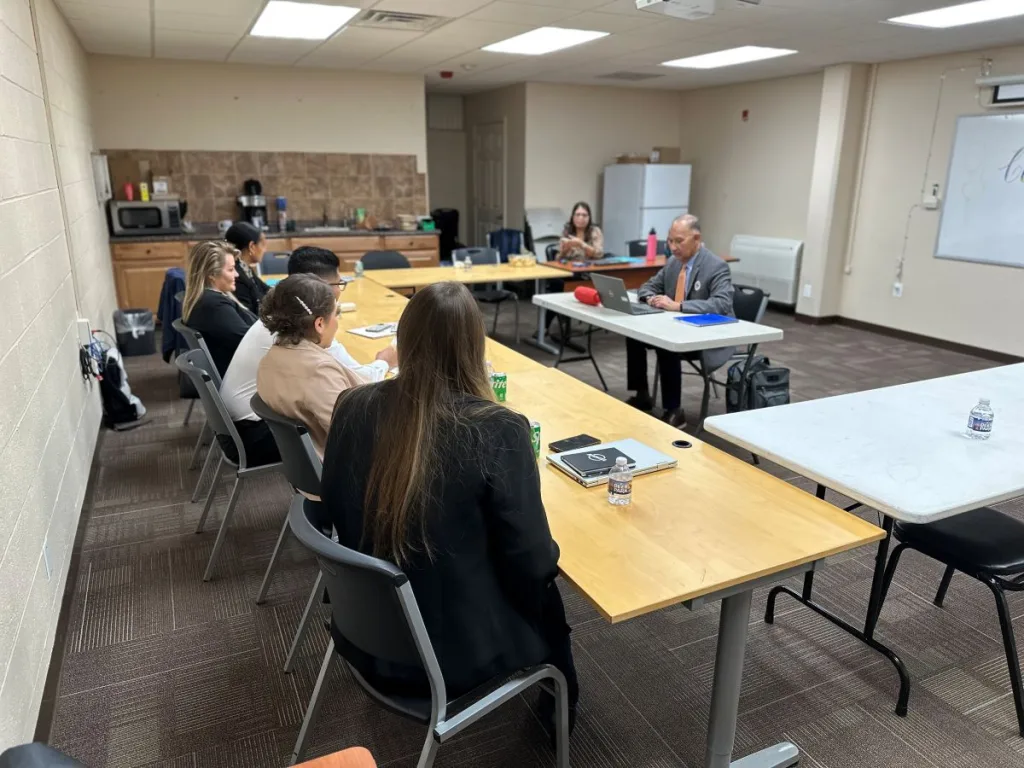
While working with a client who was a chef back in his home country, Thomson helped him find a job as part of kitchen staff at a golf club. Over time, his responsibilities grew and eventually he was granted asylum at which point his family joined him.
His job, combined with securing a place to live, played a crucial role in helping him find stability for himself and his family. To this day, they stay in touch with Thomson and Catholic Charities DC, always expressing their gratitude.
A Journey to Make a Difference
At just 20, Jones began her career as an educational aide and concurrently ran an afterschool program. Later, she shifted to working with the Metropolitan Police Department (MPD) answering 911 calls for three years.
“I saw how the system works, and saw how it impacted families,” she said. What she witnessed and heard made Jones want to make a change in people’s lives before it led to that 911 call.
After MPD, she worked with Far Southeast Family Strengthening Collaborative, which deepened her work with children, families, and their communities in DC. Eventually she landed at Catholic Charities DC, earned her master’s in social work, and just as the pandemic began, began working as a school based mental health therapist.
It’s here that she came across one client – an eight-year-old girl – who had an unstable relationship with her mother and an unsafe home life.
“Exploring her relationship with her mom was uncomfortable and difficult,” Jones said, “but I worked with her and her family to get to the point where she could express herself and know when to ask for help and how to do it.”
Change did not happen overnight, and Jones had to make sure the child, along with her mother and siblings, had a safe place to live while she regularly worked with her. Jones used approaches and strategies she was well-trained on and experienced with to build the child’s self-esteem and create constructive outlets for her to express herself. Jones even connected her mother to Catholic Charities DC’s wraparound services, including Compass, to help provide her with the support she needed.
Two years later the work paid off. At 10, Jones’ young client “graduated,” as Jones puts it, and now feels safer, has a healthier relationship with her family members, and has more confidence and resilience.
Jones continues to check in with her and lets her know that she is always available if she needs help or support.
Society’s Unseen Heroes
They may go unseen in our communities, but at Catholic Charities DC we see and recognize our social workers as the bridge to the path to stability. Jones, Pugh, Thomson, and many others play a critical role in the fabric of our society and community.
Because of their knowledge, unique set of skills, and empathetic nature, they can connect with people experiencing homelessness, find hope for newcomers to this country, and create safe spaces for children facing difficult situations.
“Homelessness doesn’t have a specific face,” said Pugh. “The people here can look like anyone. Many residents get up and go to work every day. Often [homelessness] is the result of economic barriers and the high cost of housing.”
Each one of them looks at the whole person, their unique journey and challenges, and helps those in need navigate tumultuous waters while holding their hand.
“If we could humanize one another, it would make life so much sweeter for us all,” said Jones.
And at the end of their day, when they have reviewed and written their notes, while prioritizing what needs to be done the next day, they pack up, close their doors, and head home knowing they have the opportunity to help someone along their journey.
“What makes it even more meaningful is that their stability doesn’t just affect them,” Thomson said, “it positively impacts their entire family. Knowing that they’re going to be okay, and that their loved ones are too, is the best part of this work.”